What happens when graduate students studying similar issues rarely have the chance to connect?
At UT Austin, aging research spans disciplines from social work and public health to engineering and technology. Yet students working on related questions may spend much of their graduate studies within their own departments, with few opportunities to exchange ideas or collaborate.
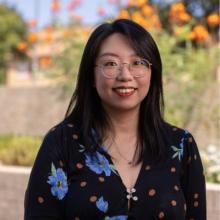
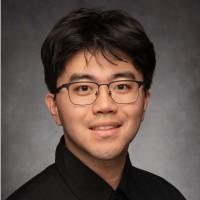
For Xiaoyi Zeng, a doctoral student in the School of Social Work, this was a challenge worth addressing. Together with Sibo Gao and Zexi Zhou, two graduate students she met through the Texas Institute on Dementia, Aging, and Longevity (TIDAL) Graduate Student Council, she turned their shared interest in aging research into a project supported by the Graduate Office of Career and Life Design’s (GOCLD) Reimagining Professional Development Award.
We spoke with Zeng about how the idea came together, what the team learned along the way, and how the experience shaped their perspectives on collaboration and professional development.
What inspired you and your team to start this project?
I’ve always believed that aging cannot be studied in silos.

My research focuses on aging, dementia and caregiving. I was the only doctoral student in my school focusing on aging-related research, but from my previous work experiences, I knew that addressing the challenges older adults face requires perspectives from many different disciplines, including medicine, technology, communication and engineering.
When I met Sibo and Zexi through the TIDAL GSC, we started connecting through writing groups, research discussions and informal gatherings. I remember thinking, “I use a lot of qualitative research, but others may be more skilled at quantitative research. Could we work together and learn from each other to tackle the research questions we care about?”
Our conversations gradually grew into a concrete goal: to help graduate students find one another, exchange knowledge and explore research and career opportunities together.
How did your team bring this idea to life?
With three major events to organize, we decided to share the leadership. Each of us took responsibility for one event while supporting the others along the way.
We started with an interdisciplinary research roundtable, where we intentionally grouped students from different disciplines, research backgrounds and stages of their graduate programs. Rather than having students stay with people they already knew, we wanted to spark new conversations and potential collaborations.
Our later aging & technology panel with faculty members explored emerging technologies in aging research, including artificial intelligence (AI) and robotics, their ethical challenges, and what they could mean for future careers.
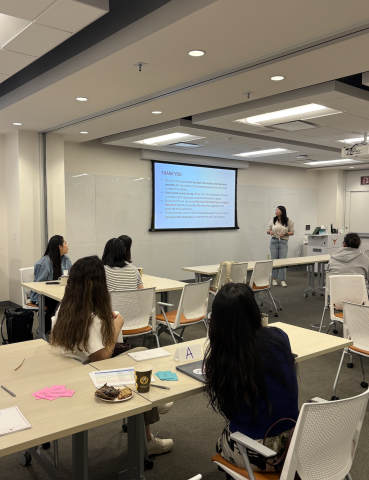
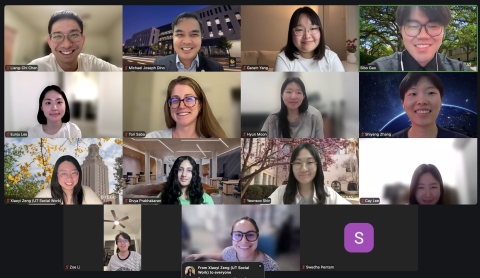
For our final event, we invited professionals from academia and industry to share their career trajectories and spoke about the unwritten rules for career development. We also adapted the event to an online format with breakout rooms, giving students more opportunities to connect directly with the panelists.
Throughout the project, Gao and Zhou played essential roles. Zhou continued supporting our work even after graduating and starting an Assistant Professor position in University of Victoria in Canada. Gao, now president of the Graduate Student Council, led our final event and helped bring together resources from the council and his department.
We each had the opportunity to lead, but none of us had to do it alone.
What was the most meaningful impact of the project?
Looking back, the most meaningful impact was beyond the attendance that we could measure – the long-term engagement.
After the research roundtable, we shared participants' contact information and research interests with those who had registered, helping students connect even if they couldn't make it to the event.
Some students began working together on research projects and grant applications, while others discovered peers with similar interests whom they hadn't known before, sometimes even within their own departments.
After the two panels, both panelists and students expressed interests in continued conversations. These conversations will be sustained through activities organized by TIDAL GSC in the upcoming semesters, such as Technology and Aging Salons, and Faculty-Student Coffee and Connect events. What stayed with me most was knowing that students who once felt alone in their research could now see a community of people working toward similar goals.
How did GOCLD support your team throughout the process?
When we first applied for the Reimagining Professional Development Award, I thought the biggest benefit would be having additional resources to expand the activities we had already been organizing. What I didn’t anticipate was how much work it would take behind the scenes to bring everything together.
Organizing campus-wide events meant coordinating with faculty and panelists, finding accessible spaces, preparing promotional materials, and making sure students from different departments could participate. With a limited timeline and our own graduate studies to balance, honestly, there was a lot to manage.
GOCLD’s support made a huge difference. Meg Sweeny, Annie Maxfield and Natasha Small supported the team throughout the planning and coordination process.
“I really enjoyed working with Zeng and the team. It was very evident how passionate they are about the work and connecting anyone in a similar field of study and workforce interest area," Meg Sweeny, Program Manager for Community Engaged Experiences, said. Their commitment made supporting the team incredibly simple and very rewarding."
Beyond the practical support, we learned a lot about program planning, coordinating with different stakeholders, and creating opportunities for meaningful student engagement. These were skills I hadn’t fully considered when we first started, but they became an important part of my professional development.
What did you learn from this experience, and what advice would you give other graduate students?
My biggest advice would be to not underestimate your ideas. When we started, we were simply hoping to expand the small activities we had already been organizing. I remember wondering whether our idea was even ambitious enough to receive support.
You don’t need to start with a big idea to make a meaningful impact. What matters is recognizing a real challenge that students face and being willing to do something about it. With the right support and people working toward a shared goal, even a small initiative can create opportunities that extend far beyond what you originally planned.
Have an idea of your own?
The Reimagining Professional Development Award supports graduate students in turning their ideas into meaningful professional development opportunities for their peers.
Applications for the 2026–2027 cycle are now open. Learn more and apply by Dec. 1, 2026.